











 April 18-20, 2025
Fukuyama, Japan
|
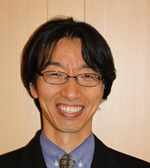
Prof. Alexander Kusenko, Department of Physics and Astronomy, UCLA, Los Angeles, USA Alexander Kusenko is Professor of Physics and Astronomy at UCLA. He also holds an appointment of Senior Fellow at the Kavli Institute for the Physics and Mathematics of the Universe (IPMU) at the University of Tokyo. He is an Associate Editor of Reviews of Modern Physics, the most highly cited journal published by the American Physical Society. Kusenko is a Fellow of the American Physical Society (elected in 2008 “for original and seminal contributions to particle physics, astrophysics, and cosmology”). In 2021, Kusenko was named a Simons Fellow in Theoretical Physics. He received an Outstanding Referee Award from the American Physical Society (2012). He has served as a general member of the board of the Aspen Center for Physics for three five-year terms (2004-2019). Speech Title: Effective, evidence-based use of AI in physics courses at UCLA Speech Abstract: Recent education research done at UCLA shows effectiveness of AI tools in improving the learning outcomes in undergraduate courses. A curated AI chat assistant and AI generated hints were integrated into the homework assignments, reducing or eliminating the cost to the student, in terms of time, energy, and social barriers or fear of judgment. The learning outcomes were analyzed and published in a peer-reviewed paper Y. Lu, K. Supriya, S. Shaked, E. H. Simmons, A. Kusenko, Phys. Rev. Phys. Educ. Res. 21, 010160 (2025). The results show that all the students benefit from these AI tools, and the students who had less-than-adequate preparation coming into the class receive the greatest benefit. Inspired by the results of this research, UCLA has started a program AI and Mathematical Skills (AIMS), implementing these successful interventions in a broad range of undergraduate classes. Other universities in the USA and in Japan have expressed interest in using similar AI tools in their classes. I will review the research results and their implementation at UCLA and beyond. |
|
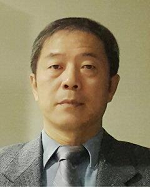
Prof. Tsukasa Hirashima, Hiroshima University, Japan Tsukasa Hirashima received his B.E., M.E. and PhD from Osaka University in 1986, 1988 and 1991 respectively. He became a professor of the Graduate School of Engineering, Hiroshima University in 2004. Now he is a professor of the Graduate School of Advanced Science and Engineering, Hiroshima University. Dr. Hirashima has contributed to Technology-Enhanced Learning, especially in artificial intelligence in education. He has proposed the “Open Information Structure” approach as an original framework to design technology-enhanced learning based on knowledge engineering. He has received several awards e.g. Distinguished Researcher Award from Asia-Pacific Society for Computers in Education, Best Paper Award from ICCE at 2001, 2002, 2021, 2023 and Field Innovation Award Gold Prize from the Japanese Society for Artificial Intelligence. He also served as President of the Asia-Pacific Society for Computers in Education from 2012 to 2013. He was a visiting researcher at Colorado University Boulder in 1995, a visiting professor at Indonesia University of Education in 2018. Now, he is an adjunct professor of education faculty, Malang State University, and a visiting professor of computer science faculty, University of Indonesia. Speech Title: Open Information Structure Approach (OISA): Reconstructing External Representations for the Formation of Internal Representations Speech Abstract: Open Information Structure Approach (OISA) proposes a learning-engineering perspective in which instructional content is treated not only as information to be delivered, but as a shareable external structure that learners can inspect, manipulate, and reconstruct. This talk introduces OISA through the central idea that learning can be designed as a process of reconstructing external representations (e.g., concept maps, structural diagrams, worked-solution structures, or other explicit knowledge organizations) so as to support the formation of internal representations—that is, learners’ integrated understanding of concepts and relations. I will outline (1) the design rationale of opening information structures for learners, (2) how reconstruction activities can elicit prediction–verification cycles and make learners’ meaning-making processes observable, and (3) how OISA enables systematic design and analysis of learning by linking external structures, learner operations, and process evidence. The talk concludes by discussing implications for evaluating learning beyond test scores, and by positioning OISA as a practical framework for designing learning environments that remain effective in contexts where answers and explanations are increasingly available as external artifacts (including those produced by generative AI). |
|
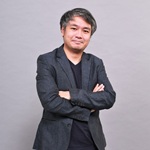
Prof. David Willson Del Testa, Bucknell University in Lewisburg, USA Prof. David Del Testa has taught at Bucknell University since 2004. He teaches courses on modern Europe and Southeast Asia as well as methodology courses. He has written widely on labor history in French colonial Indochina, with a particular emphasis on railroad workers. More recently, he has turned his full attention to the Digital Sojourns Project, an effort to create large-area, accessible, and inclusive virtual travel experiences that complement traditional university study abroad programs or virtual journeying of any kind. Besides his work as a professor, he advocates for migraine-related and special education causes. Speech Title: Can video games offer off-the-shelf solutions to accessibility in educational digital twins for the humanities and social sciences? The case of the Digital Sojourns Project Abstract: Hyperrealistic immersive digital twins offer exciting opportunities for humanities and social sciences educators to help their students visualize and analyze historical and contemporary spaces and places with unparalleled depth and accuracy. Not only can educators narrate their students’ travel through these immersive spaces, but students can guide themselves through them, satisfying their individual curiosity in the context of collective learning. However, accessibility remains an important challenge. Groups such as the Web Accessibility Initiative of the World Wide Web Consortium (W3C) and Accessible Development for XR of XR Access have developed guidelines and best practices for the architecture, implementation, and accessibility of user experience in digital twins. And yet, universal standards for interaction with digital twins as educational environments do not exist, despite noble efforts by important hosts of digital twins such as ESRI, Unity, Unreal, and Microsoft to promote such accessibility. A natural reliance on keyboards, mice, or joysticks for virtual maneuvering creates barriers for those with low vision and mobility limitations. This presentation illustrates the work of the Digital Sojourns Project at Bucknell University in Lewisburg, Pennsylvania, United States. Digital Sojourns are large-area, accessible, immersive travel experiences that complement traditional university study abroad programs by allowing students who cannot travel for reasons of physical or other challenges to do so in engaging and content-rich virtual recreations of real spaces overseas, with the possibility of earning college course credits as they do so. The first Digital Sojourn uses Matsuo Bashō’s 1692 Narrow Road the Deep North as the basis for its digital twin. The Digital Sojourns Project imitates the approaches to spatial accessibility used in popular video games, arguing that thoughtful replication of widely-tested solutions originating from the video game industry offer educators modifiable, off-the-shelf solutions without the need to produce custom solutions that may tax already slim development budgets. |
|
Prof. Yue Chen, Queen Mary University of London, UK Prof. Yue Chen is a Professor of Telecommunications Engineering at Queen Mary University of London (QMUL), where she serves as Director of Scholarship, leading strategic initiatives in curriculum innovation, educational research, and the Scholarship of Teaching and Learning. She also acts as Senior Advisor for Transnational Education on the Joint Programme between QMUL and Beijing University of Posts and Telecommunications (BUPT), providing academic leadership across international education and quality enhancement. A Fellow of the Institution of Engineering and Technology (FIET), a Senior Member of the IEEE, and a Chartered Engineer with the IET, Prof. Chen brings deep disciplinary expertise and extensive strategic leadership experience to her work in advancing transformative teaching and learning practices in higher education. Speech Title: Rethinking Teaching Excellence in the Age of AI: What Does “Good Teaching” Mean When Machines Can Do So Much? Abstract: As generative AI (GenAI) reshapes the landscape of higher education, long-established assumptions about what constitutes “good teaching” are undergoing profound transformation. When AI systems can generate explanations, offer personalised feedback, evaluate complex work, and support students’ intellectual processes at scale, traditional indicators of teaching excellence are no longer sufficient. In this talk, Prof. Chen examines how frameworks for evaluating teaching must evolve in an AI-pervasive world and what forms of educator expertise remain uniquely human and indispensable. Drawing on her experience in leading curriculum innovation, educational research, and Scholarship of Teaching and Learning initiatives, she will explore emerging criteria for meaningful teaching impact, those centred not on content transmission, but on designing powerful learning environments, cultivating students’ critical and ethical AI literacy, and fostering motivation, identity, and belonging. The session aims to stimulate global reflection on how educators can continue to create irreplaceable value in an era where machines can perform increasingly sophisticated cognitive tasks. |
|
Prof. Wernhuar Tarng, National Tsing Hua University, Hsinchu, Taiwan Professor Wernhuar Tarng received his MS and PhD degrees in electrical and computer engineering from the State University of New York at Buffalo in 1987 and 1992, respectively. He is currently a professor in the Graduate Institute of Learning Sciences and Technologies at National Tsing Hua University, Taiwan, where he has made significant contributions to both research and teaching. His research focuses on the integration of virtual reality, augmented reality, and artificial intelligence in educational applications, particularly for teaching complex subjects such as nanotechnology, robotics, and semiconductor manufacturing processes. Speech Title: Developing Elementary Ecology and Environmental Education Curriculum through the Integration of Virtual Reality, Drone Technology, and Indigenous Culture Abstract: The traditional cultures and religious beliefs of Taiwan’s Indigenous peoples embody profound principles of ecological protection, including respect for nature, conservation of biodiversity, sustainable resource use, communal sharing, and the sanctification of natural environments. These environmental ethics reflect long-standing Indigenous wisdom and provide valuable foundations for contemporary ecological and science education. Integrating natural science and environmental education with Indigenous culture not only promotes biodiversity conservation and sustainability, but also supports the preservation of Indigenous cultural heritage and contributes to long-term sustainable development. Virtual reality (VR) technology creates immersive three-dimensional environments through computer interfaces and head-mounted displays, enabling users to experience realistic sensory perceptions and interact dynamically within virtual spaces. Its immersive and interactive characteristics enhance engagement, presence, and experiential learning. Drones, or unmanned aerial vehicles (UAVs), operate through remote control or automated systems without onboard pilots. With advances in flight control, GPS navigation, and wireless communication technologies, drones have been widely applied across civilian, commercial, and educational domains. Their aerial imaging capabilities offer unique perspectives that support spatial understanding and environmental observation. This study integrates virtual reality and drone-based aerial imaging with Indigenous culture to develop natural science instructional materials for elementary education. The primary objectives are to promote Indigenous science education, enhance students’ learning motivation and understanding, and reduce the digital divide faced by Indigenous communities. The instructional design emphasizes local cultural resources, traditional knowledge, and ecological contexts, transforming them into immersive virtual learning experiences for students in Grades 3–6. Three Indigenous communities were selected as main learning scenarios. First, the Danaiku Ecological Park and the Tsou Shanmei Community in Alishan serve as a learning environment integrating VR and drone imagery to present gorge landscapes, clear mountain streams, and rich biodiversity. Learners can virtually observe endemic fish species such as Onychostoma alticorpus, explore canyon terrain, and experience traditional Tsou cultural festivals, thereby strengthening ecological awareness and cultural understanding. Second, the Dulan Community of the Amis people on Taiwan’s eastern coast is featured as a coastal learning context. Through VR and drone technologies, students explore intertidal ecosystems, coastal and mountain landscapes, and Amis cultural practices, including traditional crafts and folk festivals. Aerial perspectives enable learners to appreciate the spatial relationships between land, sea, and community development while engaging with Amis cultural creativity. Third, Sandimen Township in Pingtung County represents Paiwan traditional culture and craftsmanship. VR environments and drone imagery showcase the Paiwan Art Boulevard, traditional slate house settlements, forested valleys, and cultural ceremonies. Students can virtually explore architectural features and natural landscapes, fostering deeper appreciation of Paiwan cultural heritage and artistic traditions. Following the development of these instructional materials, a teaching experiment has been conducted to evaluate learning outcomes, motivation, and learner attitudes. The results will inform large-scale implementation in Indigenous schools, supporting culturally responsive education and advancing the integration of immersive technologies in Indigenous science learning. |
|
Assoc. Prof. Sheng-Shiang Tseng, National Chengchi University, Taiwan Dr. Sheng-Shiang Tseng is an Associate Professor in the Department of Education at National Chengchi University, Taiwan. He earned his Ph.D. in Learning, Design, and Technology from the University of Georgia, where his research focused on technology-enhanced language learning and teacher professional development. His current work explores how generative artificial intelligence (GenAI) can serve as a learning companion in education rather than a mere content generator. Dr. Tseng has led and collaborated on several projects funded by the National Science and Technology Council, including a distinguished young scholar project on developing online gamified bilingual teacher communities. His research has been published in international journals such as Educational Technology & Society, Interactive Learning Environments, and the International Journal of Educational Technology in Higher Education. A recipient of the Wu Ta-You Memorial Award for young scholars, Dr. Tseng also serves as a guest editor, editorial board member, and reviewer for international journals in educational technology. His long-term goal is to advance the meaningful integration of technology into learning environments that foster higher-order thinking, emotional intelligence, communication, and creativity. Speech Title: From Generator to Partner: Reframing GenAI in Education Abstract: Generative Artificial Intelligence (GenAI) has rapidly entered educational contexts. While there is nothing wrong with using GenAI in education, its current application remains limited to information retrieval, lacking contextual sensitivity and deeper pedagogical value. This presentation explores the use of GenAI in education beyond passive content delivery toward supporting active, reflective, and higher-order learning. It highlights the crucial role of human teachers and instructional design in transforming GenAI into a meaningful scaffold. Drawing on three AI modalities such as conversational agents, robotic agents, and pedagogical agents, the presentation demonstrates their roles in promoting comprehension, emotional intelligence, and reflective teaching practice. Study 1 developed a collaborative reflection model in which in-service teachers received feedback from a teacher educator, peer teachers, and ChatGPT. The study examined how these feedback sources contributed to teachers’ reflective thinking. Study 2 employed a three-group experimental design with 100 preservice teachers, comparing three GenAI models to examine how GenAI can scaffold teacher metacognition. Results showed that contextualized GenAI significantly outperformed the standard GenAI in improving metacognitive knowledge. The presentation concludes by advocating for AI-empowered learning that positions educators as designers of learning objectives and instructional tasks, while GenAI may serves as a context-sensitive, reflective partner providing scaffolding and feedback. |
|
Assoc. Prof. John Blake, University of Aizu, Japan Dr John Blake is a multidisciplinary scholar whose expertise spans applied linguistics, education, computer science, mathematics education, and business administration. He began his career teaching English in Hong Kong, Thailand, and Japan before moving into teacher training, assessment, and materials development. His professional journey—grounded in applied linguistics and evolving through computational design—has culminated in a distinctive research focus that bridges language, logic, and technology. At the University of Aizu, he teaches and supervises across both the Center for Language Research and the Graduate School of Computer Science and Engineering. His courses reflect his dual disciplinary grounding, ranging from authorship analysis using Python and expert systems to information ethics and thesis writing. As an educator, he integrates corpus linguistics, computational analysis, and AI-driven methods to create research-informed, technology-enhanced learning experiences that are both rigorous and engaging. A self-described corpus-computational linguist, he leads interdisciplinary teams in developing bespoke tools for language analysis and learning. His research centres on forensic authorship analysis and the development of explainable, AI-supported systems for identifying distinctive stylistic and linguistic signatures in texts. His projects combine corpus-based precision with computational modelling to advance methods that are transparent, interpretable, and defensible in forensic contexts. His work has contributed to the growing intersection between forensic linguistics and artificial intelligence, exploring how stylometric features, language models, and statistical profiling can throw light on the hidden patterns of authorship. His ongoing research pushes toward explainable AI systems that balance linguistic theory, computational robustness, and forensic validity. Speech Title: Authorship Analysis in the Age of AI: From Expert Reasoning to Multi-Agent Pipelines Speech Abstract: Authorship analysis is a challenging computational and linguistic task, which harnesses linguistic evidence to profile, verify, or attribute authorship. In forensic contexts, this task is complicated by limited and non-representative data, adversarial writing conditions (e.g. stylistic obfuscation), cross-genre comparison, and the requirements imposed by legal frameworks such as the Daubert criteria. A three-tier taxonomy of approaches is introduced, comprising expert-driven interpretive approaches, analytical similarity-based approaches, and predictive modelbased approaches. Within this taxonomy, nine core methods are identified, ranging from expert linguistic reasoning and rule-based analysis to statistical, stylometric, machine-learning, deep-learning, LLM-based, and multi-agent pipeline approaches. The framework is sufficiently flexible to accommodate emerging analytical techniques. The paper concludes by arguing for an eclectic, evidence-aware approach to authorship analysis that prioritizes transparency and contextual validity. |
|
Asst. Prof. Osman SELVİ, Fenerbahce University, Istanbul, Turkey Dr. Osman Selvi is an Assistant Professor in the Department of Computer Engineering at Fenerbahçe University, Istanbul, Türkiye. He holds two bachelor’s degrees — in Computer Systems Education from Gazi University and in Computer Engineering from Kocaeli University — and a Ph.D. in Computer Engineering from Istanbul Aydın University. His primary research focuses on Blockchain Technologies, particularly on positioning blockchain as a complementary and supportive layer to centralized systems. His work explores the use of blockchain for auditing and verification mechanisms, aiming to enhance transparency, reliability, and interoperability in digital ecosystems. He has coordinated the formation of a multidisciplinary consortium and submitted a COST Action proposal titled “Blockchain-Based Academic Credential Verification for Enhanced Trust and Transparency (BACVET)” (Proposal Reference: OC-2025-1-29022), which is currently under evaluation by the European Union. The initiative seeks to address the international challenge of academic credential verification through secure, GDPR-compliant blockchain frameworks. Prior to his current academic role, he served as a Technical Teacher at the Turkish Ministry of National Education (2007–2022) and as a lecturer at Marmara University and Fenerbahçe University. He has been a full-time faculty member at Fenerbahçe University since 2022. Speech Title: The Global Credential Verification Crisis: Leveraging Blockchain's Auditability to Solve Fraud, Mobility, and the GDPR Paradox Speech Abstract: Academic credential verification is experiencing a global crisis as traditional paper-based systems struggle to cope with increasing international student mobility and sophisticated fraud schemes. With over 4.6 million international students enrolled in OECD countries, verification demands now exceed national capacities, creating significant risks across critical sectors including healthcare and education. This presentation examines the multifaceted nature of this crisis, exploring the tensions between technological solutions and regulatory frameworks across different jurisdictions. While blockchain technology offers promising features for enhancing security and auditability, its implementation faces substantial challenges regarding data protection regulations, interoperability, and institutional adoption. The discussion emphasizes the necessity of a multidisciplinary approach that integrates perspectives from information engineering, legal studies, educational sciences, and economics. Current initiatives across various regions demonstrate diverse strategies for addressing these challenges, yet a cohesive global framework remains elusive. Drawing from international research collaborations and stakeholder engagement, the presentation identifies key barriers to effective credential verification and highlights emerging pathways for cross-border cooperation. Particular attention is given to the role of educational institutions in navigating the complex landscape of digital credentialing while maintaining academic integrity and supporting student mobility. The analysis concludes by outlining critical research directions and policy considerations for developing sustainable, inclusive, and effective verification systems that can support the evolving needs of global education while addressing security concerns and regulatory requirements. |
|
Prof. Rex Bringula, University of the East, Philippines Rex P. Bringula is a full professor in the College of Computer Studies and Systems at the University of the East (UE). He was the Coordinator for Responsible AI Integration in Education at UE, and has been accepted as postdoctoral researcher in the Education University in Hong Kong. He earned his PhD in Technology Management from the Technological University of the Philippines and PhD in Computer Science from Ateneo de Manila University as DOST-Engineering Research and Development for Technology scholar. He has participated in numerous research projects funded by both educational institutions and governmental bodies, in addition to actively participating in local and international conferences. He has published more than 100 research articles indexed in major databases. Recently, he and his colleague developed a new clustering algorithm titled “Sand Dune Clustering Algorithm,” which is accessible in the ACM Digital Library. He is a certified AI for Good Educator awarded by AI Singapore. He has been recognized with several awards from different organizations including the University of the East, the Philippine Society of Educators, the UE Alumni Association, and international conferences, acknowledging his contributions in multiple roles such as educator, alumnus, and researcher. Speech Title: Mathematics Learning Through Mobile CSCL: Challenges, Insights, and Interdisciplinary Opportunities Speech Abstract: This talk presents an overview of mobile computer-supported collaborative learning (mCSCL) for Mathematics and highlights its potential as a catalyst for multidisciplinary and interdisciplinary research. Grounded in foundational theories of collaborative learning and CSCL, this talk synthesizes documented benefits—such as enhanced engagement, improved problem-solving, stronger teamwork, and deeper conceptual understanding—while also identifying persistent challenges, including unequal participation, personality differences, guessing behaviors, and complex group dynamics like “stag-and-hare hunting” behaviors. Using the case of Ibigkas! Math, I will discuss how issues encountered in mCSCL environments naturally require insights from psychology, sociology, education, computer science, and data science. Ongoing and future research directions emphasize behavior detection algorithms, collaborative intelligence, motivational and personality factors, and expanded applications of mCSCL across mathematics fields and levels, underscoring the rich opportunities for interdisciplinary collaboration in advancing mCSCL systems. |
|
Asst. Prof. Xiaoyu Zhang, City University of Hong Kong, Hong Kong Xiaoyu Zhang is a tenure-track Assistant Professor at School of Creative Media, City University of Hong Kong. Her research interests lies broadly in data visualization, education technology, human-computer interaction (HCI), human-AI collaboration, and explainable AI. She particularly focuses on integrating data visualization and artificial intelligence (AI), especially natural language processing (NLP), to explore and exploit knowledge for varies applications in education, smart manufacturing, and human well-being. Xiaoyu directs the KnowVis lab at CityU and her work has been published at top-tier journals and conferences including International Journal of Artificial Intelligence in Education, IEEE TVCG, IEEE VIS, ACM CHI, ACM IUI, IEEE PacificVis, ACL. She also received the Honorable Mention Best Paper Award at IEEE VIS 2022 and has been granted multiple US patents. Xiaoyu has been recognized as the Best Graduate Researcher in the Department of Computer Science at UC Davis. She also served on the organization committee of AI and the Future Factory at AI House Davos 2024 and the 6th Workshop on Visualization for AI Explainability at IEEE VIS 2023. Before joining CityU, Xiaoyu was a Postdoctoral Fellow at the ETH AI Center, ETH Zurich. She received her Ph.D. degree in Computer Science from University of California, Davis, her Master’s degree in Computer Science from Zhejiang University, and her bachelor’s degrees in Digital Media Art (Major) and Advertising (Minor) from Xiamen University. In addition to her academic pursuits, Xiaoyu has profound industrial internship and collaboration experience with leading organizations such as Meta, Microsoft Research Asia, Bosch Research, Netease Games, EthonAI, and the US National Institute of Standards and Technology (NIST). Speech Title: From Human to AI and Back: Knowledge and Education in the AI Era Abstract: The recent rapid integration of AI in education has sparked a critical question: where do human cognition and machine intelligence converge? In this talk, I will share our latest explorations into the mutual inspiration between human and machine learning processes, and the effort to find their common ground. I will discuss how understanding human learner’s status, such as tracking their cognitive load via EEG or moderating textual aids for reading, can inform more empathetic education technology design, and how Large Language Models (LLMs) can be used to simulate human learners to provide teachers with novel pedagogical insights. Meanwhile, I will demonstrate how machine-centric knowledge structures can be translated back to humans through interactive visualization technologies. By examining these intersections across various real-world educational scenarios, I will show the possibility to align machine logic with human mental models and thus move further than streamline information transfer. Our ultimate goal is create a productive feedback loop that improves both human learning and model training. |
|
Assoc. Prof. Yazilmiwati Yaacob, Sunway College Kuala Lumpur, Malaysia Assoc. Prof. Dr. Yazilmiwati Yaacob is the Director of the Centre for Continuing Education at Sunway College Kuala Lumpur. Her expertise spans entrepreneurship, educational technology, social sciences, Islamic studies, and General Studies. She actively contributes to global academic discourse through presentations and publications at renowned conferences, including CETA 2023 in Istanbul, ICETC 2024 at the University of Porto, and ICETC 2025 at the University of Barcelona, where she served as co-chair. Her research focuses on leveraging Generative AI to overcome language barriers and enhance academic writing, advocating for inclusive and future-ready education in the digital era. Speech Title: Breaking Language Barriers with AI: Transforming Academic Writing in Higher Education Speech Abstract: The integration of Generative Artificial Intelligence (AI) in higher education is revolutionizing how students overcome linguistic challenges and enhance academic writing. This presentation explores the transformative role of AI tools such as ChatGPT, Quillbot, and Grammarly in supporting multilingual learners, particularly in contexts where language proficiency impacts comprehension and performance. Drawing on empirical findings from a study involving over 1,200 university students, the discussion highlights how AI-driven translation and grammar correction reduce cognitive load, enabling learners to focus on conceptual understanding rather than linguistic limitations. Beyond language support, Generative AI fosters inclusivity, improves writing quality, and accelerates learning processes, positioning itself as a digital peer and academic assistant. However, the adoption of AI in education also raises critical questions about ethics, academic integrity, and dependency. This session will examine best practices for integrating AI responsibly into teaching and learning strategies, ensuring that technology serves as an enabler rather than a substitute for critical thinking. By addressing both opportunities and challenges, the talk aims to provide actionable insights for educators, policymakers, and institutions seeking to harness AI for equitable and future-ready education. |
|
Assoc. Prof. Dr. Paul Arjanto, Pattimura University, Indonesia Dr. Paul Arjanto is an Associate Professor in Educational Management at Pattimura University, Indonesia. He holds a Doctorate (Dr.) in Educational Management from the State University of Malang, with scholarly expertise in educational leadership, school management, policy implementation, and educational innovation. His research interests focus on educational leadership development, education quality improvement, technology in education (including digital transformation and digital literacy), financial education, and moral leadership in schools. Through interdisciplinary collaborations, he has contributed to research integrating technology, well-being, and leadership development to strengthen institutional effectiveness and student success. He welcomes international research collaborations on educational leadership development, digital transformation in education, and evidence-based strategies to enhance student engagement within sustainable and inclusive educational systems.. Speech Title: Learning Management Systems as Infrastructure for Educational Leadership: A Bibliometric Analysis Speech Abstract: The rapid digitalization of education has made learning management systems (LMS) core infrastructure for instruction, assessment, analytics, and professional learning, expanding educational leadership from technology adoption to data-informed organizational change. This study maps how LMS scholarship intersects with educational leadership by profiling contributors and the field's conceptual structure. We conducted a bibliometric performance analysis and science mapping of Scopus-indexed publications, 2004–2024. From 342 records, 93 met inclusion criteria. Performance indicators were combined with co-authorship, co-citation, bibliographic coupling, and co-word analyses. Results show an early plateau (≤4 papers/year through 2015), a step-up from 2018, and a 2024 peak; 69% of output appears in 2018–2024. The United States (25.7%) and Australia (9.2%) lead contributions, with Indonesia among the top ten. Co-word networks reveal three clusters: (i) leadership–organization–professional development; (ii) teaching–students (including disciplinary implementations); and (iii) LMS–e-learning–learning systems. Overlay visualization highlights the recency of digital leadership. Highly cited anchors concentrate influence, consistent with long-tail and core–periphery regularities. The field is maturing from tool-centric adoption toward leadership-enabled, pedagogy-grounded, analytics-informed transformation. Practically, institutions should pair LMS investments with leadership development, change management, and robust data governance. Future research should operationalize digital-leadership competencies, advance ethical and privacy-sensitive analytics, and broaden context-diverse evaluations, especially in non-Anglophone systems. |
|
Asst. Prof. Anthony Kong, The Hong Kong Polytechnic University, China Prof Dr Anthony Kong is an Assistant Professor in Design at The Hong Kong Polytechnic University, Fellow of Royal Society of Arts. He is a transdisciplinary academician and professional with profound knowledge and expertise in an interdisciplinary area of design, computing, and service. His research interests lie in AI for Entertainment, Cultural Arts Technology, Design for Hospitality & Tourism, Design for Sports, Edutainment and X-Reality. Speech Title: From Relics to Reality: Designing Technology-Enabled Learning for Living Heritage Speech Abstract: This speech introduces "The Lion Dance VR Revival" a research-through-design project that moves cultural heritage education from passive viewing to active, embodied practice. The innovative Tri-Modal Design Framework, which structures immersive learning into three progressive stages: Meaning (understanding context and narrative), Motion (gamified skill acquisition with motion feedback), and Mastery (synthesizing skills in a dynamic ritual scenario). By using VR not as a showcase but as an interactive tutor (digital sifu), this approach transforms learners from spectators into practitioners. The talk will demonstrate how this model fosters deeper cultural connection, knowledge retention, and empathy, offering a replicable blueprint for the experiential revitalization of intangible heritage globally. |
|
Asst. Prof. Ronel F. Ramos, FEU Institute of Technology, Philippines Ronel Francisco Ramos is an Assistant Professor II at the FEU Institute of Technology, where he specializes in information technology education, artificial intelligence in learning, and game-based instructional design. He is currently completing his Doctor of Information Technology at the University of the East and holds a Master’s degree in IT from the Technological University of the Philippines. A multi-certified educator, Ronel has earned multiple Microsoft Innovative Educator Expert (MIEE) designations and IT Specialist certifications in Java, Python, HTML, and CSS. He is an active researcher and presenter, contributing studies on AI integration, sentiment analysis, optimization algorithms, and educational game development to prominent international conferences. Beyond teaching and research, he also serves as adviser to the FEU Tech Tamaraw Esports Club and frequently delivers talks on emerging technologies, AI tools in education, and digital innovation. Speech Title: ResAI for GenAI: Fostering Integrity, AI Literacy, and Innovation in Higher Education Speech Abstract: The rapid transformation of teaching, learning, and scholarly processes brought about by generative AI raises serious concerns regarding academic integrity and responsible use in higher education. ResAI for GenAI, a useful framework that helps organizations promote the adoption of ethical AI while facilitating significant educational innovation, is presented in this talk. Three main aspects are the focus of the framework: innovation, AI literacy, and integrity. First, by rethinking tests and encouraging open, responsible use of AI tools, it outlines ways to maintain academic integrity. Second, it highlights how crucial AI literacy is becoming and outlines the necessary skills for teachers and students to assess generative AI critically and use it effectively. Third, it looks at creative methods to incorporate AI to improve access, customization, and learning experiences. |
|
Assoc. Prof. Hideaki Yoahida, Morioka University, Japan Dr. Yoshida received his Ph.D. in Education from Tohoku University in 2024. Before entering academia, he served as public elementary school teacher in Iwate Prefecture for approximately 20 years, working in classroom instruction, curriculum design, formative assessment practice, and student guidance. His long classroom experience informs his research and enhances the practical relevance of his scholarly work. His research interests include self-regulated learning co-regulation evaluative judgement and formative feedback design. He also studies the integration of generative AI into educational assessment and teacher–AI collaborative learning processes. He is advancing research on AI-supported assessment models and teacher–AI collaboration frameworks that support responsible and pedagogically meaningful AI use in schools. Speech Title: Designing Educational AI Guidelines for Responsible and Formative Use: Insights from the Japanese Context Abstract: Generative artificial intelligence (AI) is rapidly transforming education, creating an urgent demand for governance systems that balance innovation and accountability. While international organisations have proposed normative principles for responsible AI use, operational governance architectures remain under specified. This study examines the rapid revision of Japan’s Generative AI Guidelines for Primary and Secondary Education from Version 1.0 to Version 2.0 and conceptualises the process as an evolution of structured governance rather than an administrative update. Policy document analysis identified layered transformations, including limited pilot experimentation, institutionalised feedback loops, stakeholder reclassification, and checklist-based operational encoding. From these elements, the Rapid Iterative Governance Model (RIGM) is extracted as a governance design template, demonstrating how normative principles can be translated into implementable and revisable policy architecture. The findings suggest that short-cycle policy refinement becomes feasible when experimentation, feedback, and responsibility encoding are embedded within institutional mechanisms. |
|
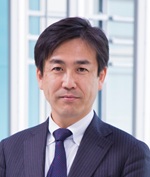
Prof. Shin’ichi Warisawa, The University of Tokyo, Japan Shin‘ichi Warisawa is a professor in the Department of Human and Environmental Studies at the Graduate School of Frontier Sciences, The University of Tokyo. After earning a Bachelor of Engineering in Mechanical Engineering from The University of Tokyo in 1989, he received a Master of Engineering from the same university in 1991 and a Doctor of Engineering in 1994. He began his career in 1994 as a research assistant at the Institute of Precision Engineering at the Tokyo Institute of Technology, where he remained until 2000. He then returned to the University of Tokyo, serving as a lecturer in the Department of Mechanical Engineering (2000–2003) and as an lecturer/associate professor (2003–2012), before becoming an associate professor at the Graduate School of Frontier Sciences (2012–2015). Additionally, from 2010 to 2011, he conducted research as a visiting researcher at the Massachusetts Institute of Technology (MIT) Electrical Engineering Laboratory. His research background spans precision engineering, medical robotics, and nano- and micro-machines (NEMS), and he has previously worked on projects such as tele-surgical robotic systems and nanofabrication for nanomechanical resonators. Building on this solid expertise in advanced sensing and mechanical systems, his current research explores the intersection of engineering and human well-being. His specific research interests include stress monitoring, emotion monitoring, human behaviour monitoring, and blood pressure monitoring. By deeply analyzing these physiological and behavioural indicators, his laboratory aims to optimize human-environment interactions and actively applies these engineering methods to the development of innovative educational technologies and adaptive learning environments. Speech Title: Engineering Innovative Learning: Integrating Physiological Sensing, Multisensory Approaches, and Generative AI Abstract: The rapid shift toward digitalization and online education has highlighted the need for personalized, adaptive learning environments. However, accurately capturing learners’ invisible internal states—such as cognitive load, engagement, and emotional responses—remains a major challenge in educational technology. In this presentation, I will introduce the “Human-Environmental Informatics” framework developed at the University of Tokyo’s. I will propose a comprehensive engineering approach to measure, analyze, and optimize learning experiences by bridging the gap between human sensory perception and the digital environment. During the presentation, I will share our latest empirical findings focused on the following three key areas. First, I explored the visualization of learner engagement through biometric and behavioral sensing, such as eye-tracking and emotion recognition derived from facial expressions and voice data. Second, I analyzed how an instructor’s presence and gaze in video-based classes influence learners’ comprehension and preferences, and discuss the optimization of online learning environments. Finally, I will introduce cutting-edge technological interventions designed to enhance learning outcomes. These include multisensory approaches that provide vibration feedback synchronized with the instructor’s voice to convey enthusiasm, as well as the integration of generative AI to support spatial memory techniques such as the method of loci. By creating a feedback loop between biometric sensing and innovative technological interventions, I aim to design a next-generation adaptive learning ecosystem that maximizes human learning potential. |